
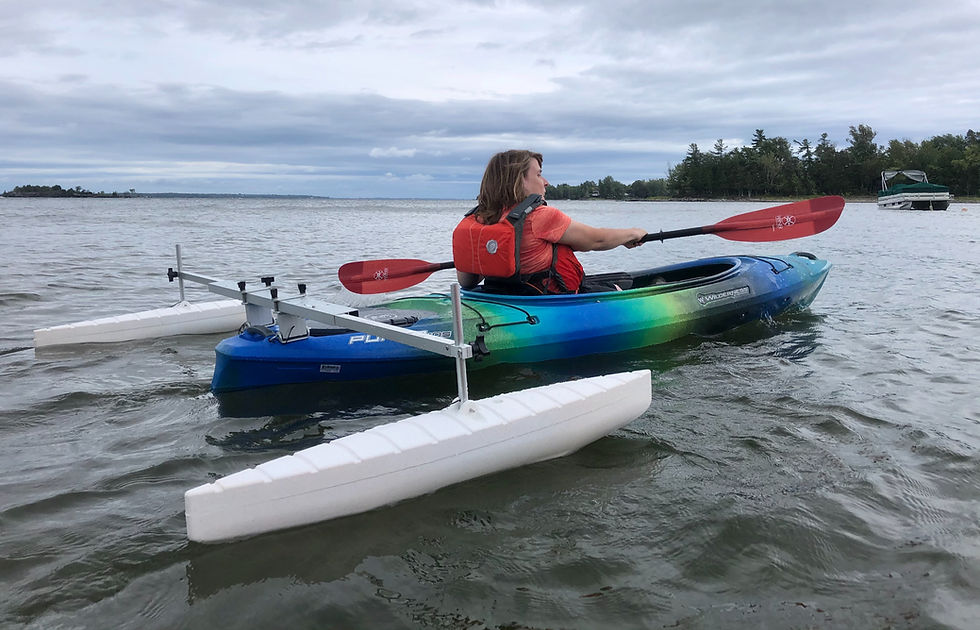
What Is a Kayak or Canoe Outrigger?
Kayak and canoe stabilizing outriggers are floating devices attached to the sides of a boat, parallel to the hull, that provide additional buoyancy to the vessel. They offer an added level of stability and security to paddlers, helping balance the kayak and lowering the likelihood of tipping over.
How Stabilizing Outriggers Help
For many paddlers, balance -- not strength -- is the biggest barrier to feeling comfortable in a kayak. A kayak that feels unstable can quickly turn an outing into a stressful experience.
Our kayak stabilizers, made by Wave Armor, are designed to add meaningful side-to-side stability, helping paddlers feel safer, calmer and more confident on the water. They work for both sit-inside kayaks and canoes.
Whether you’re a new paddler, fishing or supporting an adaptive program, outriggers can make kayaking feel approachable again.
Once installed, the outriggers extend outward from the kayak, adding buoyant pontoons on both sides.
This wider footprint:

Increases side-to-side stability
Reduces sudden, unsettling movement
Encourages a more relaxed, upright posture
Allows paddlers to focus on paddling, fishing, or enjoying the surroundings

"I feel more confident on the water."
Why Stability Matters
For many people, outriggers are the difference between hesitation and enjoyment.
When a kayak feels tippy, paddlers often:
Limit how long they stay on the water
Avoid shifting their weight
Feel anxious about entry, exit or unexpected movement
Decide kayaking “just isn’t for them”
Stabilizing outriggers help change that experience by:
Reducing fear of tipping or capsizing
Making entry and exit feel more controlled
Supporting paddlers with balance or coordination challenges
Creating a steadier platform for fishing, photography or relaxed paddling
Helping adaptive programs offer safer, more inclusive experiences
Who These Outriggers Are For
Stabilizing outriggers are used by a wide range of paddlers and programs, including those below. They can be used on their own or as part of a broader adaptive setup.

Paddlers with Poor Balance
People with balance, coordination or core-strength challenges
Aging or Injured Paddlers
Aging or newly injured paddlers looking for extra reassurance
Novice
Paddlers
New paddlers who want to feel more secure while learning
Canoe or Kayak Anglers
Anglers who want a more stable fishing platform
Adaptive Programs & Parks
Adaptive paddling programs, parks, camps and rental fleets
Real Feeback from Paddlers Like You
"Angle Oar outriggers turned a tippy canoe into a 6 ft wide bottom pleasure yacht. Mounting hardware is adaptable to any kayak/canoe and take-apart design stows easily inside the craft for transport. Well worth the purchase price. Thanks, Angle Oar!"

C. Bower
Idaho
"With some careful measuring the outriggers (brackets, bars and floats) were easy to install on her kayak at the water's edge. Then at the end of the day, all the parts fit inside her kayak and are ready for the next outing. They make it so safe for Julie to be back on the water!!"
Vermont
Jeff & Julie S.
Our Stabilizing Floats in Action


FEATURES
-
Complete outrigger set (two pontoons, stabilizing bars and mounting brackets included)
-
Includes brackets for both kayaks and canoes
-
30 lbs of buoyancy per float
-
Rotationally molded, weather-resistant polyethylene floats
-
Float dimensions: 43″ L × 6.5″ H × 6″ W
-
Adjustable frame spread: 69″ – 83″ wide
-
Center receiving bar: 40″ wide
-
Total system weight: 17 lbs
-
Color: Speckled light gray
-
Can be removed when not in use; brackets remain on vessel
-
2-year manufacturer warranty
Proper installation and placement are essential for comfort, safety and unobstructed paddling.
iNSTALLATION & PLACEMENT: IMPORTANT TO KNOW
-
Best installed by someone comfortable with basic kayak rigging
-
Placement can be toward the front or rear of the kayak, depending on design
-
Must be positioned far enough from the paddling area to avoid interfering with the paddle stroke
-
Designed for kayaks with access to the underside (via a hatch or under a seat)
-
Blind installations are possible but not generally recommended
-
Angle Oar can include additional well nuts for blind installations by request
-
See the Outriggers Put to the Test
Sometimes the most reassuring thing is seeing the equipment tested.
We’ve put these outriggers through real-world stability tests to show how much support they provide. The videos demonstrate how very difficult it is to tip a kayak with outriggers installed, though not impossible. This realistic approach helps set proper expectations while building confidence.


Frequently Asked Questions
How do I know if the outriggers are compatible with my kayak?
Absolutely. If you’re unsure whether these outriggers will work with your kayak, we encourage you to contact us before ordering. Sending 2-3 photos of your kayak or canoe can be particularly helpful.
How do I install the stabilizing outriggers?
A set of printed instructions will be included with your product, but you can also access them here. You can also view our installation demo video here.
Hardware for a standard installation for either a sit-inside kayak or a canoe is included. For kayaks, check to see you have access and/or can reach far inside of your kayak hull (e.g., via a hatch or behind the seat area) in order to attach the nuts to the bolts, as the outriggers are generally placed far behind the cockpit so they do not impede with the paddle stroke. For this reason, they are generally only compatible with sit-inside kayaks unless the sit-on-top kayak has an accessible hatch cover, for example.
Do outriggers make a kayak or canoe impossible to tip?
No. Outriggers significantly increase stability and make tipping much harder, but they don’t eliminate the need for safe paddling practices. Our testing videos show both the strength and realistic limits of the system. You can find the links to those videos higher on this page.
Do outriggers interfere with the paddle stroke?
When properly installed and positioned, they should not. Correct placement is important to keep the outriggers far enough away for the paddle stroke to be clear and natural.
Are your stabilizing outriggers compatible with canoes?
Yes, our outriggers are definitely compatible with canoes and come with dedicated attachment hardware for both kayaks and canoes.
Are outriggers primarily for people with disabilities?
Not at all. Outriggers are used by new paddlers, anglers, older adults, adaptive programs and anyone who wants added stability. Sometimes they provide additional peace of mind to paddlers who aren't completely comfortable on the water.