
How Municipal Parks Are Expanding Access Through Adaptive Kayaking Programs

A Conversation with Lindsey Gallaugher of Johnny Appleseed Metropolitan Park District
On a warm summer morning, the shoreline looks a little different than it used to.
Volunteers adjust seats. Families stand close by. A paddler prepares for her first stroke with a mix of nerves and determination. Then — a gentle push from the dock — and a kayak glides forward.

For many participants, this isn’t just a day at the lake. It’s the first time someone has told them, “Yes, you can.”
Angle Oar’s adaptive paddling systems and stabilizing outriggers are helping make moments like this possible across the country. What began as equipment designed to support individuals is now embraced by entire communities. Dozens of local parks and recreation departments — including Denver Parks and Recreation, Huron-Clinton Metro Parks and Mecklenburg County Park & Recreation — are weaving adaptive kayaking into their seasonal programming.
One powerful example comes from Johnny Appleseed Metropolitan Park District (JAMPD) in Lima, Ohio. Their All Abilities Kayaking program now runs two full event days each season, creating meaningful access to the water for residents with strength and mobility limitations.
I recently spoke with Lindsey Gallaugher, Nature Education Supervisor at JAMPD, about how the program came to life, what it truly requires behind the scenes, and what other parks departments should know before getting started.
“When You’re Out There, Everyone Is the Same.”
For Lindsey, the heart of the program is simple: “It’s about removing barriers, creating opportunities,” she shared. “Our motto is connecting people with nature. It’s a wonderful thing to offer a population that is overlooked or one would assume would not want to do this.”
That sense of equality—of simply being another kayaker on the water—comes up again and again in conversations about adaptive kayaking parks and recreation programs.
“The freedom of the water. When you’re out there, EVERYONE is the same.”
That shift — from “participant” to simply “kayaker” — defines the experience.

Anthony Simpson, an accessibility advocate who helps with the program, described kayaking as:
“A wonderful experience… wonderful exercise for anyone, especially for your core and arms. I wish everyone could try kayaking at least one time.”
Outreach & Administrative Partnership
JAMPD’s success is rooted in partnership.
Because the JAMPD office is near the Allen County Board of Developmental Disabilities (ACBDD), collaboration developed naturally. Tammy DeLong, Community Connections Specialist with ACBDD, plays a critical operational role.
She coordinates scheduling, timing, rules and community partners. She handles liability waivers, marketing and outreach to day habilitation programs and residential facilities. Other board members are assigned specialized roles to support participant communication and preparation.
This division of responsibility allows park staff to focus on water safety and dock operations while ACBDD ensures participants and families arrive informed and ready.
From Grant Funding to Full-Scale Adaptive Kayaking Event
JAMPD has been serving the Lima community for over 50 years. The adaptive kayaking initiative began after securing a boating education safety grant in 2023. A key requirement of the grant was demonstrating impact, particularly in accessibility and inclusivity.
In 2024, the district implemented its first All Abilities Kayaking event using Angle Oar's adaptive paddling systems, including the Versa Paddle System and Gamut Paddle Holder System, along with kayak and canoe stabilizing outriggers.
“Our adaptive program is an event, not a recurring weekly recreational program,” Lindsey explained. “We wanted to maximize reach.”
They dedicate an entire week:
Monday: Prep
Tuesday & Wednesday: Program days
Thursday & Friday: Rain dates
Last year, they served 85 participants each of the two days, with 64 individuals kayaking over the course of both days of the event.
What It Really Takes: Operations, Staffing & Structure
JAMPD runs the event at Ottawa Metro Park’s Lima Lake, an 89-acre reservoir managed by the Ohio Division of Wildlife.
It’s easy to see the joy on the water. It’s less visible how much coordination, manpower and structure makes it possible.
Dock & Transfer Logistics
Adaptive kayaking programs use a variety of methods, equipment and locations to transfer paddlers into the kayaks. At JAMPD, the transfers take place directly on the dock.
Set up includes:
Sit-inside adaptive kayaks
Sit-on-top kayaks for water patrol (distinguished by color)
A 1:1 water patrol ratio using tow belts
A one-in, one-out dock system
Transfer benches
Outdoor rugs for slip prevention
Pre-launch land-based safety training
All five rangers operate from a floating dock measuring approximately 12–15 feet by 10 feet, using a strict one-in, one-out launch system. The dock is 8–10 feet wide in the launch area.
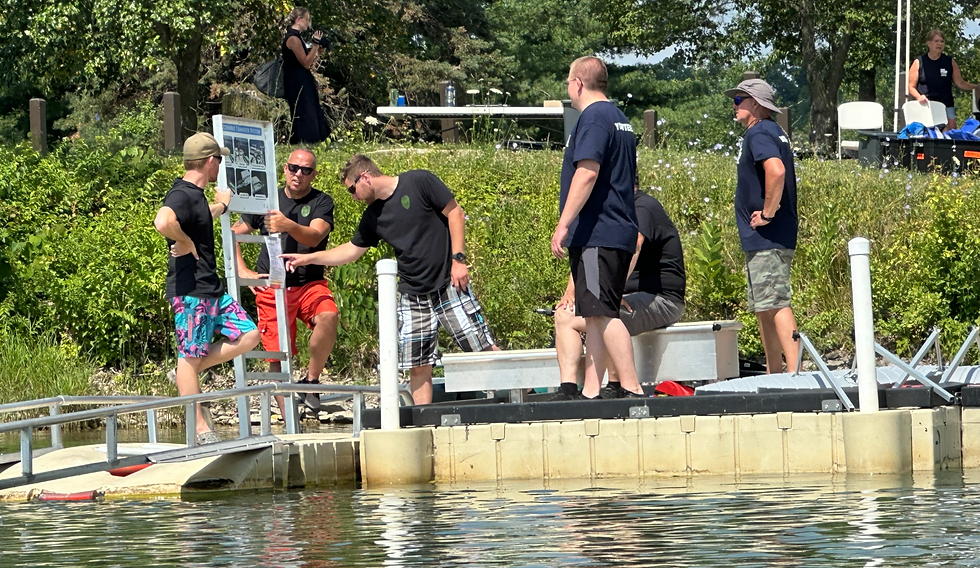
Each transfer requires coordination. A caregiver or support specialist brings the paddler down to the dock. Rangers assist with a transfer bench to help participants safely enter the sit-inside kayak. Once seated, the Versa Paddle's Hinged Mount is flipped down into position before launch.
It is physically demanding work. Lindsey noted that the first year required significant manual lifting and hands-on assistance from staff. “It was tiring,” she said.
“We also do a safety training session for participants before they get on water,” Lindsey said. “It’s about 10 minutes. We practice and show them how to use the paddle on land. That helps calm nerves.”
Tammy reinforced how critical that is:
“The safety course… is so instrumental in calming any nerves and helps the confidence level of the participants before they board the kayak.”
Staffing Ratios & Throughput

The first year, six participants were scheduled per time slot. Currently, the program runs four paddlers every half hour, allowing up to 36 participants per day on the water. A structured lunch break is built into the schedule to prevent staff fatigue.
Ohio requires a 1:5 ratio of certified instructors for boating safety programs, but Lindsey emphasized that adaptive events require significant staffing beyond minimum standards. They quickly learned that a 1:1 staff-to-paddler ratio works best. Almost all paddlers require towing assistance at some point during their session.
“It requires a lot of staff,” she said.
Chief Ranger Ben Altenbach concurs about the critical role of staffing:
“The process that made the biggest difference in the All Abilities Kayaking program was having the right people in the right roles… Sometimes you need a cheerleader. Sometimes you need a couple of strong guys to help lift people and pull boats in. It’s also important that everyone clearly knows what their role is.”
They learned early on that breaks matter too.
“Our biggest mistake was not scheduling breaks for the staff and volunteers running the event,” Ben said. “It’s easy to get caught up in the joy… and forget to take care of yourself.”
For departments considering launching their own adaptive kayaking program, this is key: joy fuels the program, but structure sustains it.
Participant Experience Beyond the Water
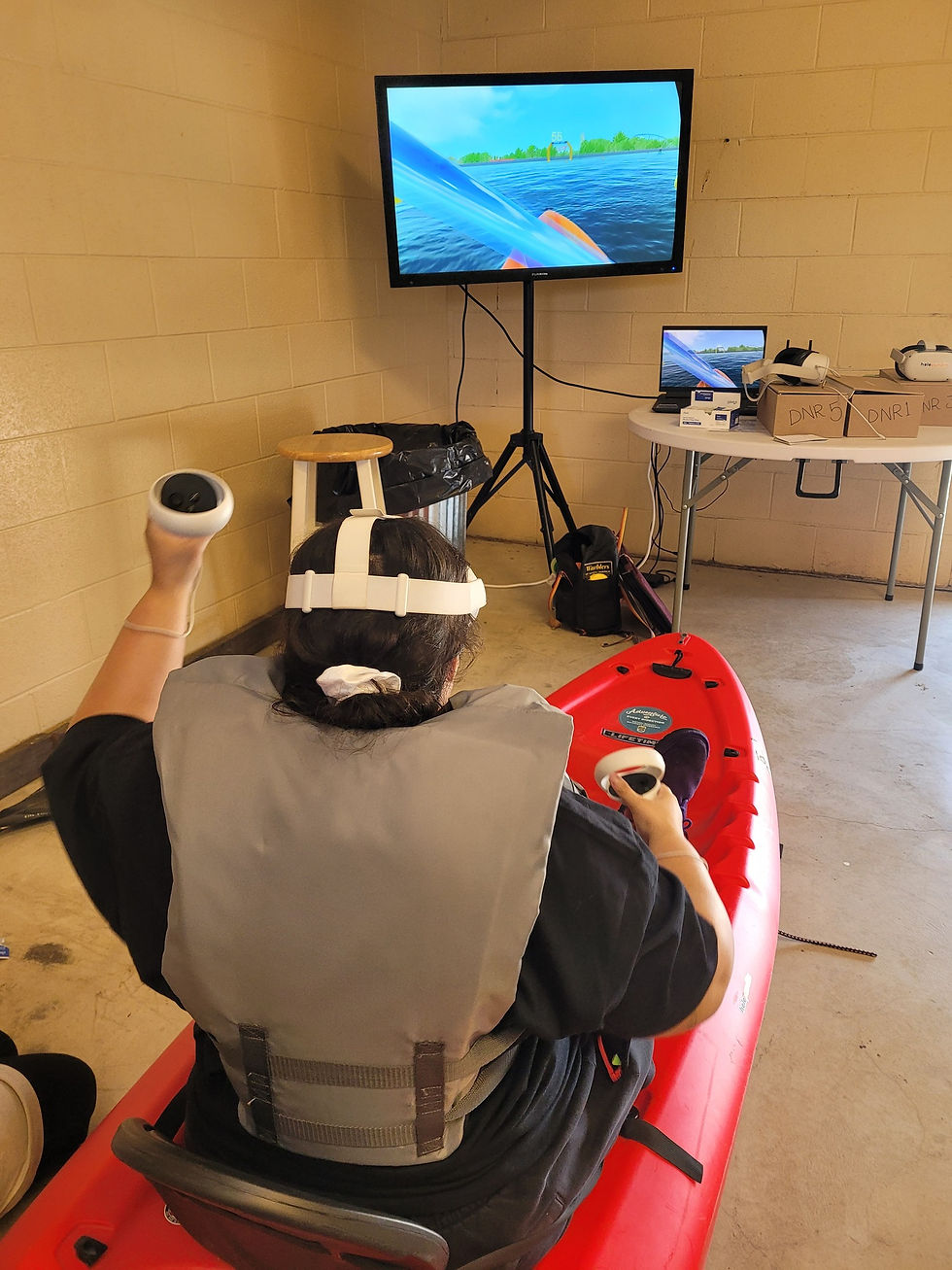
While kayaking is the core program, JAMPD intentionally created an “entertainment village” at the nearby park shelter for participants waiting their turn. Activities include yard games, virtual reality kayaking experiences and karaoke.
This allows participants to remain engaged, relaxed and socially connected, rather than feeling anxious while waiting for their launch time.
Kayaking remains the centerpiece of the event. But the broader atmosphere reinforces inclusion and celebration.
The Impact: Confidence, Family Participation and Lasting Memories
One parent shared about her daughter Aslyn:
“I think it is great to give Aslyn and the others the opportunity to explore new areas in their community. It’s a fun activity that we can enjoy as a whole family. On the water she is just Aslyn, another kayaker.”
Her family now kayaks together regularly.

For Ranger Dave Zimmerly, success is visible:
“Watching the smiles on the peoples' faces and seeing the enjoyment they were having… and the fact that I, myself, had a smile on my face all day.”
Tammy DeLong observed the same thing during the event:
“I spoke with people who utilize walkers and wheelchairs get into the kayak and get out in the middle of the lake feeling free. Everyone on the lake was the same. Everyone was in a kayak, everyone was rowing their boat, and they had wonderful guidance. It didn’t matter their ability level.”
For many participants, that feeling lingers long after the event ends.
One participant, Mikayla, was initially unsure about being on the water.

“She got out there and had an excellent time,” Lindsey recalled. “She came back the second year, both days. I see her out in the community, and she comes right up to me. That one memory that we make for a half hour, one summer, is really impactful.”
Lessons Learned & Advice for Other Parks Departments
When asked what advice she’d give to a brand-new adaptive paddling program, Lindsey reflected on how they began.
“The very first year, we had six kayaks and six people,” she said, and we "flew by the seat of our pants. We were passionate and determined but didn’t yet know what it really took to coordinate this event.”
Looking back, she recommends that new departments consider starting with a single adaptive pilot event rather than a multi-day event — unless they have strong staffing and community support already in place.
Starting small allows teams to refine transfer systems, safety flow, staffing assignments and scheduling before scaling up.
Ben offered this additional guidance:
“Listen to the population you are trying to serve. The caretakers and group homes that interact with their clients every day can give you incredibly useful insight in what each individual needs to have a fantastic time.”
JAMPD continues to improve each year, exploring easier transfer systems, portable lifting options, dock efficiencies and clearer role assignments.
Why Adaptive Kayaking Belongs in Parks and Recreation
Adaptive kayaking parks and recreation programs are not “special add-ons.” They are a natural extension of what parks exist to do:
Connect people with nature
Provide recreation for the entire community
Remove barriers
Foster independence
Build confidence
As Lindsey put it:
“Removing barriers, creating opportunities – this is what Angle Oar's products do.”
A Resource for Departments Ready to Get Started

Adaptive kayaking doesn’t have to begin large. Many programs start with a single pilot event and a small fleet of boats.
Angle Oar has developed a 32-page Adaptive Kayaking Program Operations Manual to help parks, municipalities and community-based organizations design programs that are safe, inclusive and sustainable.
If your organization is exploring adaptive paddling, we’re happy to share resources and planning support.
Adaptive kayaking is not about performance.
It’s about participation.
It’s about someone realizing they are not on the shoreline anymore.
They’re on the water — just another kayaker.
Angle Oar LLC's mission is getting people who didn’t think they had the strength or endurance to kayak out on the water and keeping experienced paddlers there longer! We provide adaptive paddles, outriggers and other equipment to people with shoulder problems, physical disabilities or limited upper body strength due to age, injury or ability.


